Preparing Your Vehicle for a New York Winter: What Every Driver Should Know
Winter in the Tri-State area brings icy roads, freezing temperatures, and unpredictable snowstorms that can push your vehicle to its limits. Preparing your car for these harsh conditions is the best way to prevent sudden breakdowns and keep your family safe on the road.
Before winter, have your battery and charging system tested, inspect your tires and pressure, verify the correct coolant protection, check the heater and defrosters, install winter washer fluid, inspect the wipers, and have any persistent transmission problems diagnosed. A little proactive maintenance goes a long way when the temperature drops.
Why New York Winters Demand Proactive Car Care
If you have ever commuted down the Long Island Expressway during a January whiteout or navigated the black ice on the Cross Bronx Expressway, you know that driving in the Tri-State area is no easy task. When the temperature dips below freezing, every mechanical system in your vehicle has to work harder. The sudden shift from mild autumns to freezing Nor'easters can take a massive toll on a car that isn't properly prepared. Preventative maintenance doesn't just save you from the massive headache of waiting for a tow truck on the side of the Garden State Parkway; it actually extends the lifespan of your vehicle.
At AAMCO Tristate locations, we see the same avoidable winter breakdowns every single year. A little bit of knowledge and a quick trip to your local Tristate AAMCO can save you thousands of dollars in emergency repairs. Let's break down exactly what you need to check—from your battery's charge to the state of your transmission—before the first big snowstorm hits our region.
The Heart of Cold Starts: Your Car Battery
Nothing is quite as frustrating as stepping out into the freezing New York morning, turning your key, and hearing nothing but a hollow clicking sound. Cold weather is notoriously brutal on car batteries. When the temperature drops, the chemical reactions inside your battery slow down dramatically, significantly reducing its starting power. At the same time, your engine requires more current from the battery to start because the engine oil is thick and sluggish.
If your battery is more than three years old, it is at a much higher risk of failing during a winter freeze. Before the season truly kicks in, have a professional test its voltage and cranking amps. It is also crucial to inspect the battery terminals for fuzzy, white corrosion, which can disrupt the electrical connection. Cleaning off this corrosion and ensuring the cables are tightly secured can make the difference between starting your car and being stranded in your driveway. If your battery is showing signs of weakness, do not wait for it to die on the coldest day of the year; let AAMCO Tristate replace it with a high-quality battery designed to withstand freezing temperatures.
Vital Fluids: The Lifeblood of Your Engine
Your vehicle relies on a network of vital fluids to keep its internal components lubricated, cooled, and functioning smoothly. During a harsh New York winter, these fluids can thicken, freeze, or lose their effectiveness if they are not the correct grade or mixed properly.
Engine Oil: Conventional engine oil thickens in the cold, making it incredibly difficult for the engine to turn over and circulate lubrication when you first start the car. Switching to a winter-grade or synthetic oil, which flows much better in freezing temperatures, will protect your engine's internal parts from excessive wear and tear.
Antifreeze/Coolant: The name says it all. Antifreeze prevents the water in your engine's cooling system from freezing and cracking the engine block. The ideal mixture for the Tri-State area is a 50/50 blend of antifreeze and distilled water. If your coolant is old or improperly mixed, you run the risk of catastrophic engine failure.
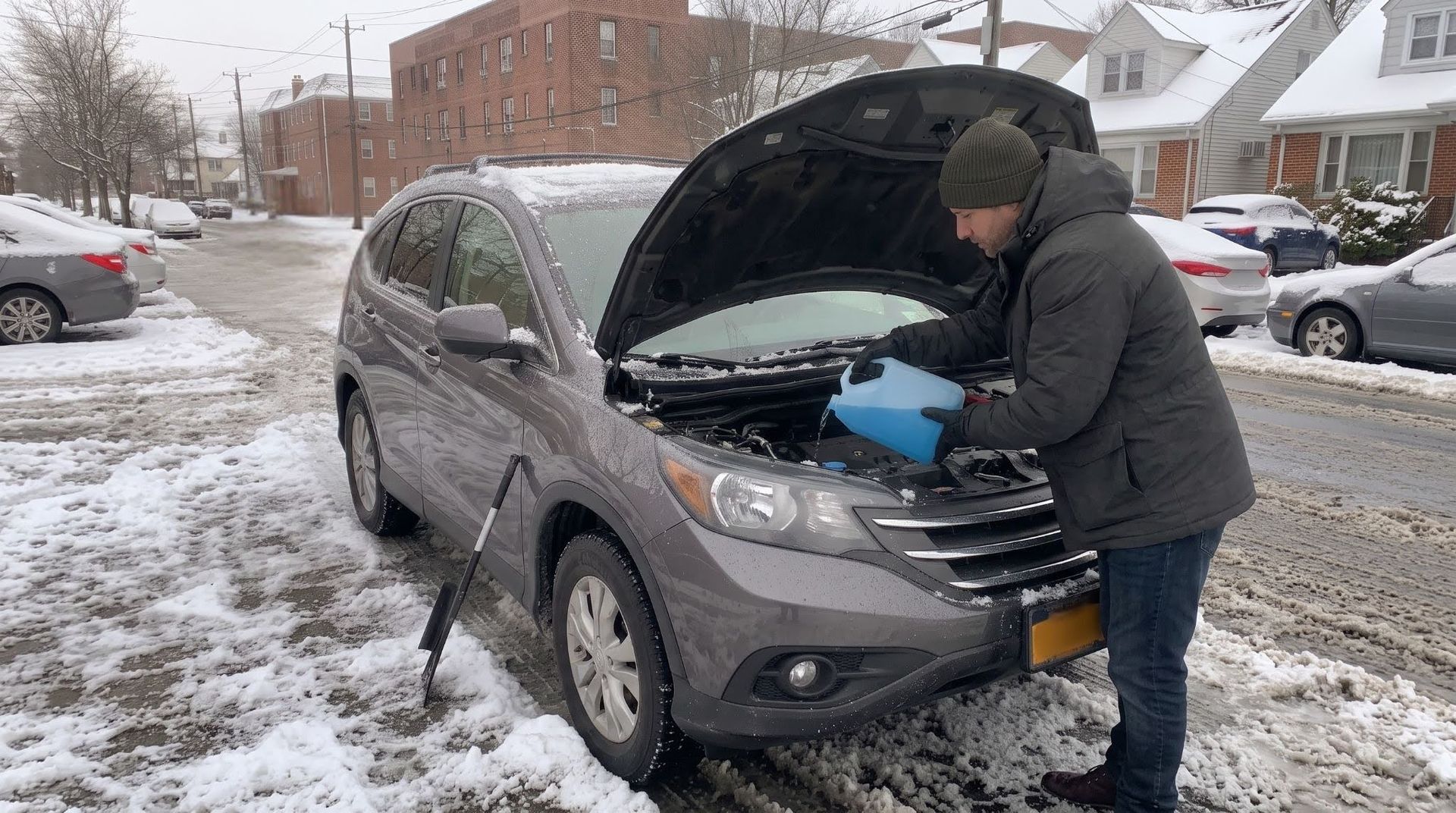
Windshield Washer Fluid: Regular washer fluid will freeze instantly on your windshield when you are driving down the BQE in January. Swap out your standard summer fluid for a winter-specific formula that contains de-icers to prevent freezing and keep your visibility crystal clear.
Tires: Your Only Connection to the Icy Roads
When you are navigating the slippery, pothole-ridden streets of New York, your tires are your first and only line of defense. Many drivers assume that all-season tires are perfectly fine for winter, but in the snowy Tri-State area, that is not always the case.
Winter tires (often called snow tires) are made from a specialized rubber compound that remains soft and flexible even when temperatures drop below 45 degrees Fahrenheit. This flexibility gives them superior grip on ice, snow, and slush. Furthermore, winter tires feature unique tread patterns with deep grooves and tiny slits called "sipes" that bite into the snow, providing significantly better traction and stopping power.
Even if you choose to stick with all-season tires, you must check your tread depth. If your treads are worn down, you will have zero control on slushy local roads. Additionally, remember that tire pressure drops approximately one PSI for every 10-degree drop in air temperature. Driving on underinflated tires compromises your handling, increases braking distance, and causes uneven tread wear. Check your tire pressure weekly during the winter months.
Heating Systems and Defrosters: Comfort and Visibility
Your car's heating and defrosting systems are about much more than just keeping you warm during your morning commute; they are critical safety features. A malfunctioning defroster can leave you completely blind behind the wheel as condensation and frost build up on the inside of your windshield.
The heating system relies on hot coolant circulating from the engine through a small radiator-like component called the heater core. If your coolant level is low, or if the heater core is clogged, you will only get cold air blowing through your vents. Before the freezing weather settles in, test your heater, defroster, and rear-window defogger to ensure they are operating at peak efficiency. If you notice any strange sweet smells (a sign of a coolant leak) or lack of heat, bring it to an AAMCO Tristate shop immediately. While you are at it, replace your windshield wipers with heavy-duty winter blades designed to break through ice and heavy snow without snapping.
Transmission Performance in Cold Weather
As the transmission experts, your local Tristate AAMCO knows just how much a harsh winter can affect your vehicle's shifting performance. Just like your engine oil, your transmission fluid thickens significantly in freezing temperatures. Until the fluid warms up, it cannot flow properly through the complex network of valves and gears inside the transmission.
Because of this thickened fluid, you might notice that your car shifts harder, delays gear engagement, or feels sluggish when you first drive it in the morning. This "hard shifting" is generally normal for the first few miles, but forcing the vehicle to accelerate aggressively while the fluid is cold can cause severe internal damage.
To protect your transmission, let your car idle for about 30 to 60 seconds before putting it into gear, and then drive gently for the first few miles until the temperature gauge begins to rise. If your transmission continues to slip, grind, or hesitate even after the vehicle is fully warmed up, it is time for an inspection. Old or degraded transmission fluid is far more susceptible to freezing and failing to lubricate properly. Having your transmission fluid checked, and potentially flushed and replaced, is one of the smartest investments you can make for your vehicle before winter.
Schedule Your Winter Readiness Check at a Tristate AAMCO
Do not let a sudden snowstorm catch you off guard. Whether you are commuting into Manhattan or taking a weekend trip to the Hudson Valley, your safety depends on a reliable, winter-ready vehicle. The master technicians at your local Tristate AAMCO shop are here to help you weather the storm. From comprehensive battery tests and fluid top-offs to expert transmission diagnostics, we will make sure your car is fully equipped to handle whatever Mother Nature throws our way.
Frequently Asked Questions (FAQs)
Do I really need winter tires if I have all-wheel drive?
Yes, all-wheel drive helps you accelerate in the snow, but it does absolutely nothing to help you stop or steer on ice. Winter tires provide the specialized rubber compound and tread depth necessary to safely grip freezing roads. AWD combined with winter tires is the ultimate safety setup for local winter driving.
How long should I let my car warm up in the morning?
Modern fuel-injected engines only need about 30 to 60 seconds of idling before they are ready to drive. The best way to warm up your vehicle's engine and transmission is to drive it gently for the first five to ten minutes. Excessive idling in your driveway actually wastes gas and can lead to long-term engine wear.
Why does my transmission slip when it is extremely cold outside?
When temperatures drop below freezing, your transmission fluid becomes thick and syrupy, preventing it from flowing quickly to lubricate internal gears. This can cause temporary delayed shifting or sluggishness until the fluid warms up to operating temperature. If the slipping continues after the car is warm, you should have it checked by an AAMCO Tristate shop immediately.
What items should I keep in my winter emergency kit?
Every driver in the Tri-State area should carry a sturdy ice scraper, jumper cables, a portable flashlight, and a warm blanket. It is also wise to pack a small bag of sand or non-clumping kitty litter to help your tires gain traction if you get stuck in a snowbank. Keeping extra winter windshield washer fluid in the trunk is another excellent safety measure.
How often should I check my tire pressure during the winter?
Because cold air condenses, your tires will lose about one PSI for every 10-degree drop in outside temperature. You should check your tire pressure at least once a week during the winter using a manual gauge. Properly inflated tires ensure better traction on icy roads and prevent premature tread wear.
Why is my car battery more likely to die in the winter?
Freezing temperatures slow down the chemical reactions taking place inside your battery, severely reducing its ability to hold and deliver a charge. Additionally, cold weather thickens your engine oil, forcing the battery to work twice as hard to crank the engine. If your battery is over three years old, this combination is often enough to kill it completely.
Is it safe to mix different colors or types of engine antifreeze?
No, mixing different types of antifreeze can cause the chemicals to react and form a thick, sludgy gel inside your cooling system. This sludge will clog your heater core and radiator, potentially leading to total engine failure. Always check your owner’s manual or consult an AAMCO technician to ensure you are using the exact coolant your vehicle requires.
What does it mean if I smell something sweet coming from my vents?
A sweet, syrupy smell coming through your heating vents is a classic indicator that your vehicle is leaking antifreeze, likely from the heater core. This is a serious issue that can cause your windshield to fog up with toxic residue and your engine to overheat. You should bring your vehicle to an AAMCO Tristate shop right away to have the cooling system pressure-tested.
Are winter wiper blades really better than regular summer ones?
Winter wiper blades are heavily encased in a protective rubber shell that prevents snow and ice from freezing into the joints of the blade. This allows them to stay flexible and maintain strong, even pressure against the glass during heavy snowstorms. Standard summer blades will easily freeze stiff and fail to clear your windshield safely.
When is the best time to bring my car to AAMCO for winter prep?
The ideal time to prepare your vehicle is in late autumn, right before the first major freeze or snowfall hits the Tristate area. Waiting until the first blizzard usually results in long lines at service centers and the risk of breaking down in dangerous conditions. Schedule a preventative maintenance appointment at your local Tristate area AAMCO shop today so you can drive with absolute peace of mind all winter long.
Share